
Holdover timing for GPS denied tactical radios
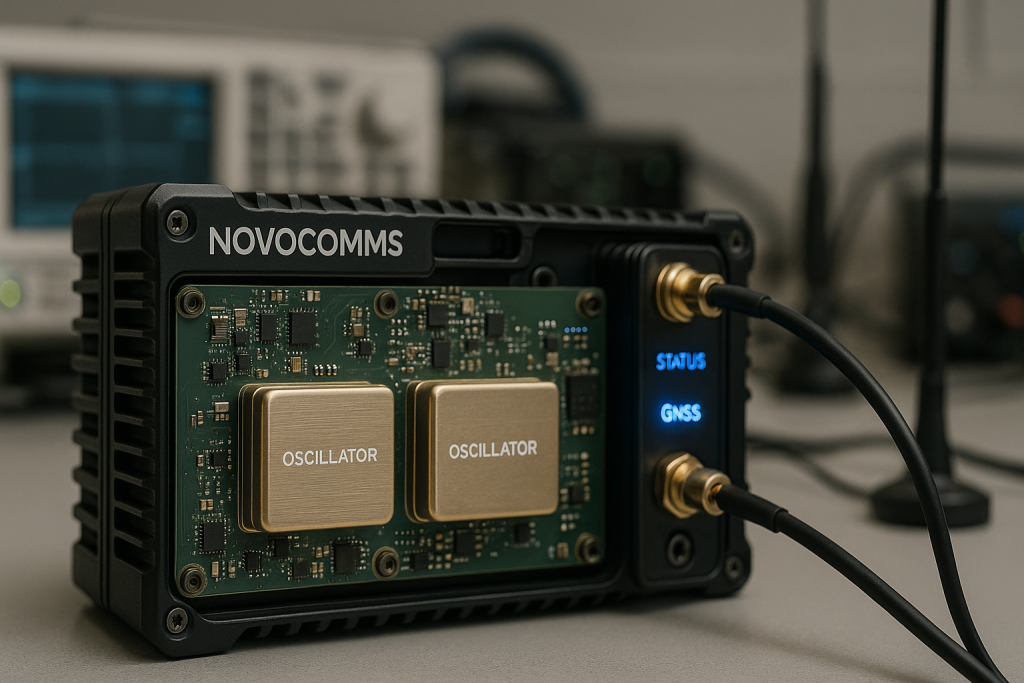
Abstract: GPS denied timing is no longer an edge case for tactical SDR networks; it is the design point. This post explains how timing loss breaks TDMA/OFDM waveforms, how to set a practical holdover budget, and how to combine oscillators, disciplining sources, and network distribution to keep sync in contested RF. We also cover current […]
Connector fretting drives PIM in vehicle installs
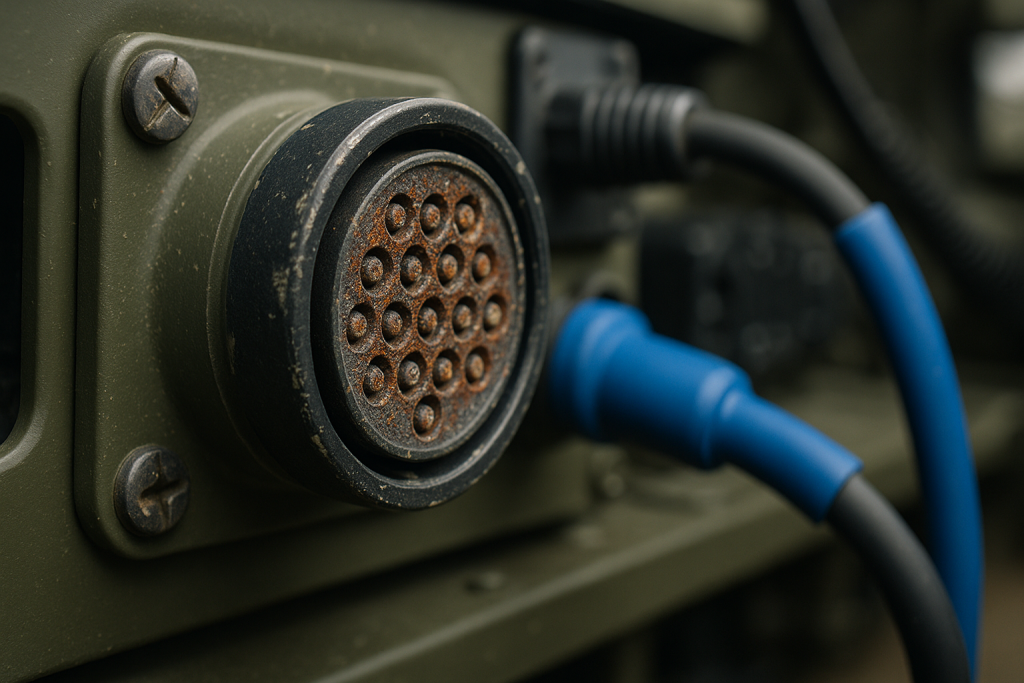
Vehicle-mounted VHF/UHF networks fail in a very particular way: everything looks fine on the bench, then the platform hits corrugations, idles for hours, and suddenly your noise floor lifts, adjacent-channel selectivity collapses, and coverage shrinks. More often than not, the root cause isn’t the radio—it’s connector fretting quietly turning a mechanically “acceptable” installation into a […]
MIL-STD-461 RE102 Fixes for Sensitive Receivers
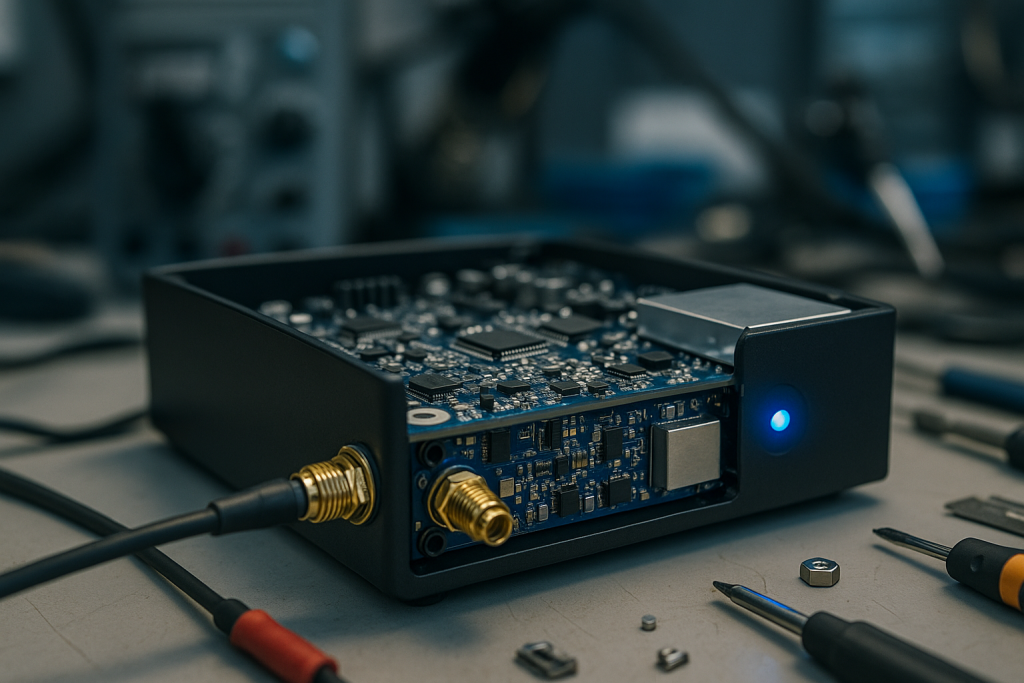
Abstract: Sensitive SDR and EW receivers can fail RE102 for reasons that have nothing to do with the RF front end and everything to do with clocks, converters, seams, and cable terminations. This post explains what RE102 is actually measuring, why limit tailoring and receiver-band notches matter, and a set of practical fixes that hold […]
Diagnosing PIM in multiband tactical vehicle antennas
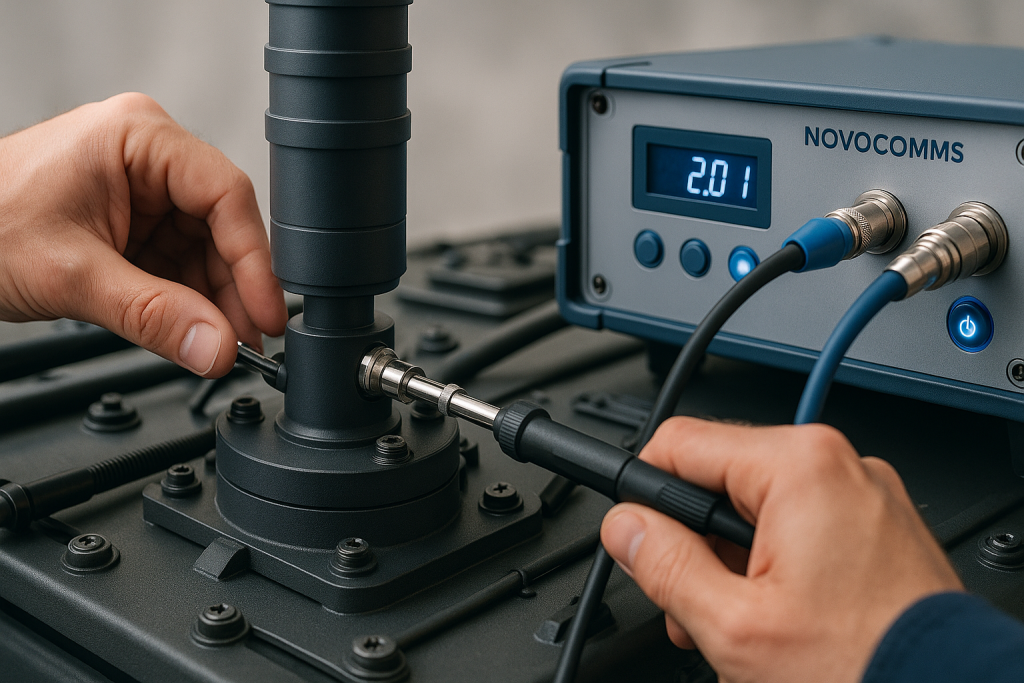
In a tactical vehicle, the hardest RF problems rarely announce themselves as “antenna faults”. They turn up as intermittent desense, unexplained bit errors, or a receiver that goes deaf only when another net keys up. More often than not, the root cause is passive intermodulation — and disciplined PIM testing is the fastest way to […]
Innovative Strategies for Tactical RF Resilience

In a contested spectrum, tactical RF resilience is no longer a ‘nice to have’ design goal—it’s the difference between a network that degrades gracefully and one that collapses at first contact with jamming, spoofing, or harsh EMI. Recent battlefield reporting and open-source analysis from the war in Ukraine has been blunt: both sides actively disrupt […]
Innovative Strategies for Tactical RF Resilience

In a contested spectrum, tactical RF resilience is no longer a “nice-to-have” attribute you add in the final design review; it’s the difference between a network that degrades gracefully and one that collapses at first contact. From small UAS links to SATCOM backhaul and GNSS-derived timing, modern tactical communications are being stressed by deliberate jamming, […]
Measuring Blocking and Desense in Tactical SDRs
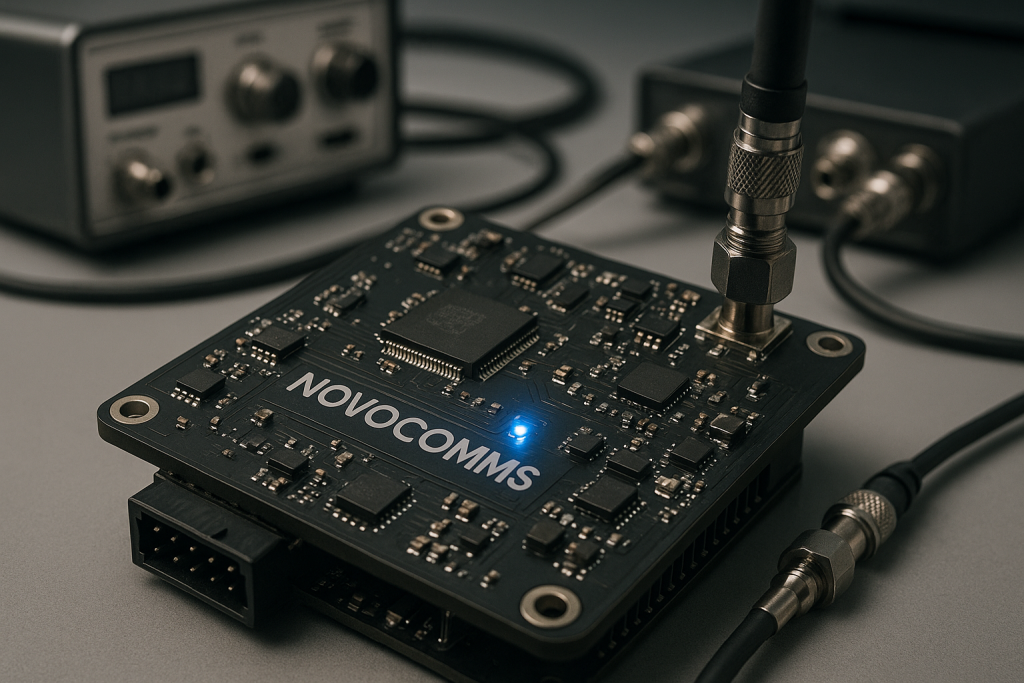
Abstract: Tactical radios are increasingly wideband, multi-channel and co-sited with other emitters, making SDR desense and blocking a day-to-day reality rather than an edge case. This post sets out practical, repeatable lab methods to measure desensitisation and blocking in VHF/UHF SDRs, explains the dominant mechanisms (ADC overload, reciprocal mixing, front-end compression), and highlights mitigation options—from […]
Measuring blocking and desense in tactical SDRs
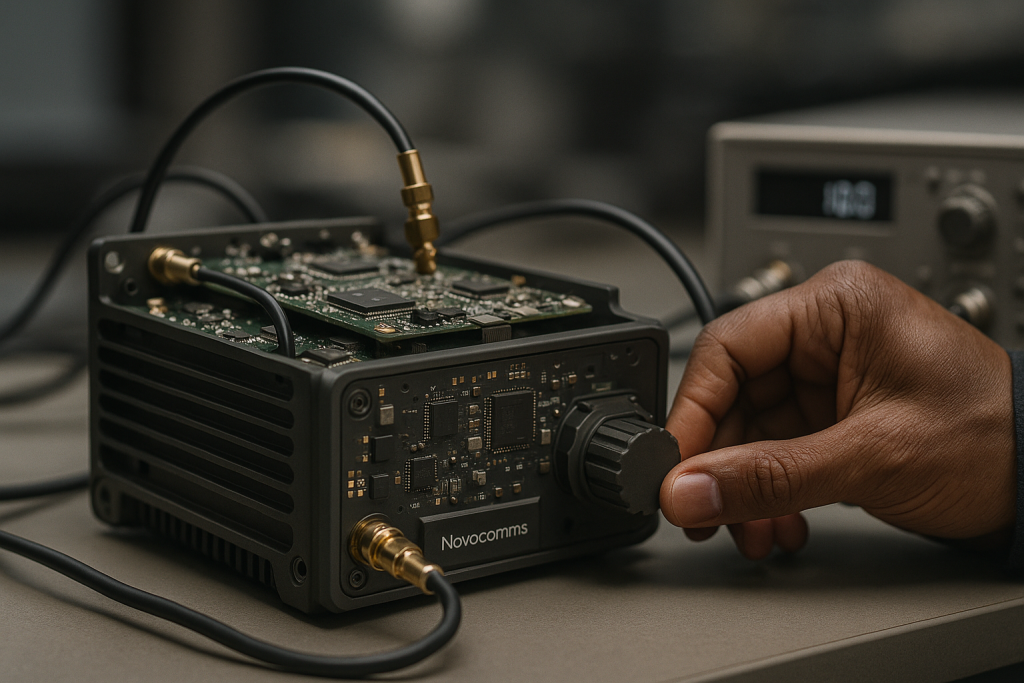
On a crowded battlefield, the radio that fails is rarely “broken” — it’s often being degraded. SDR desense is the quiet killer in tactical VHF/UHF: a nearby transmitter, a co-sited datalink, a vehicle inverter, or even another friendly net raises the effective noise floor until weak signals simply disappear. If you’re an EW test engineer, […]
Designing Resilient Tactical RF Systems for Harsh Environments

In today’s rapidly evolving defence landscape, the importance of tactical RF resilience cannot be overstated. As operations become increasingly complex, military forces are seeking advanced radio frequency (RF) communications systems that guarantee reliability and security in even the harshest environments. This blog explores how to design RF systems that are not only robust but also […]
Anti-Jamming Techniques for Tactical RF Communications

Tactical RF communications are a lifeline for military and defence operations, ensuring real-time data exchange and seamless connectivity even in hostile environments. One of the most pressing challenges in this domain is jamming — an intentional disruption of communication signals that can jeopardise mission success. To counteract these threats, RF engineers need to implement effective […]